
Bell & Beacon
Identity Architecture in Practice
Murphy developed Bell & Beacon as a self-initiated studio project exploring identity, craft, and material culture along the Maine coast.
The work began as an experiment in building a complete brand world, combining original artwork, product design, packaging, and digital storytelling within a unified visual language inspired by maritime tradition and handmade craft.
Bell & Beacon demonstrates how identity systems can extend beyond graphics into objects, materials, and lived experience.
Client
Bell & Beacon
Sector
Craft & Heritage
Location
Portland, Maine
Scope
Identity System, Product, Packaging & Environmental Applications
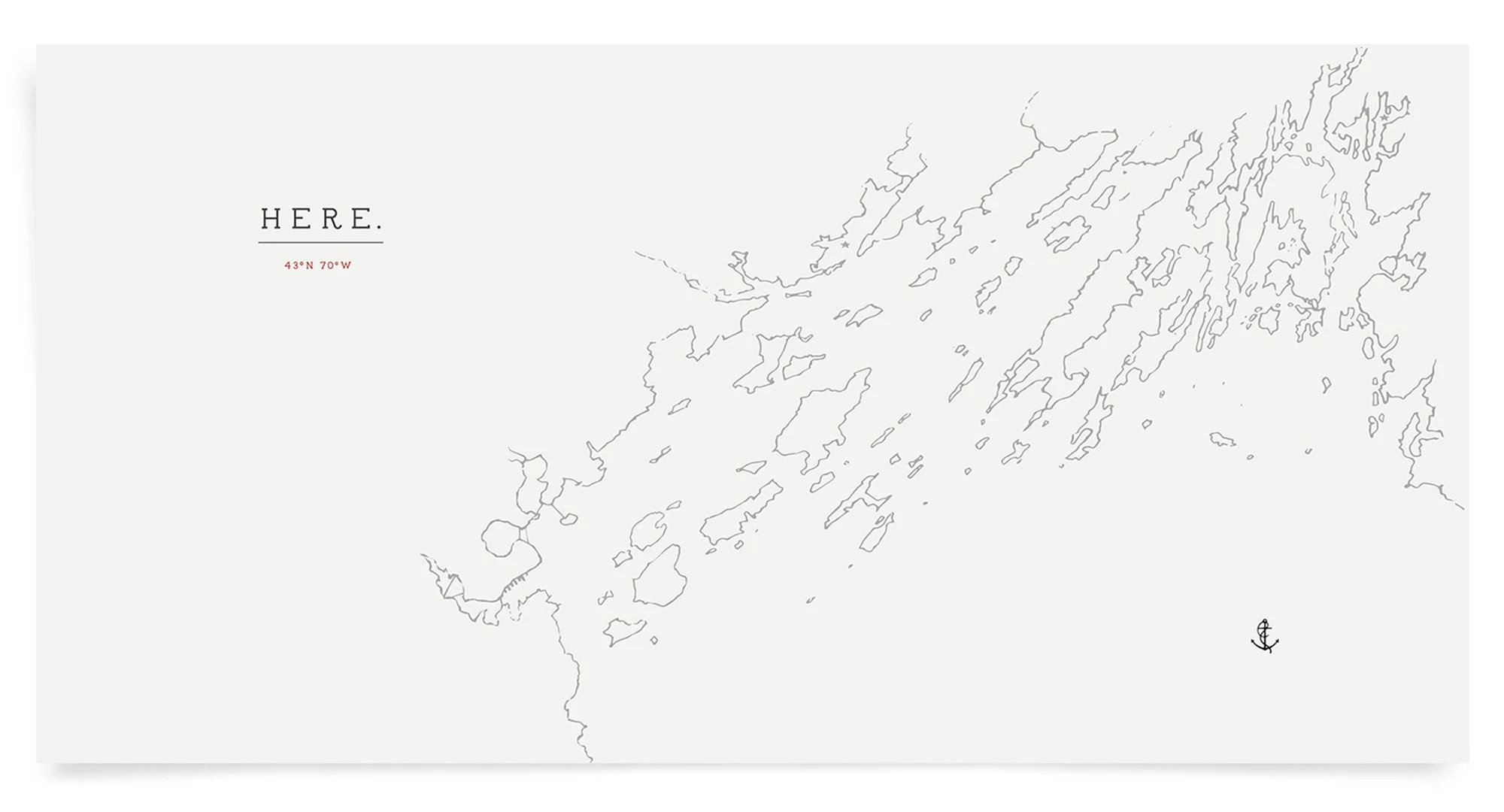
Bell & Beacon is a self-initiated studio project exploring craft, material, and place along the Maine coast.
Conceived and executed as a complete brand world, the project reflects the belief that the most enduring identities are built slowly through texture, story, and restraint.
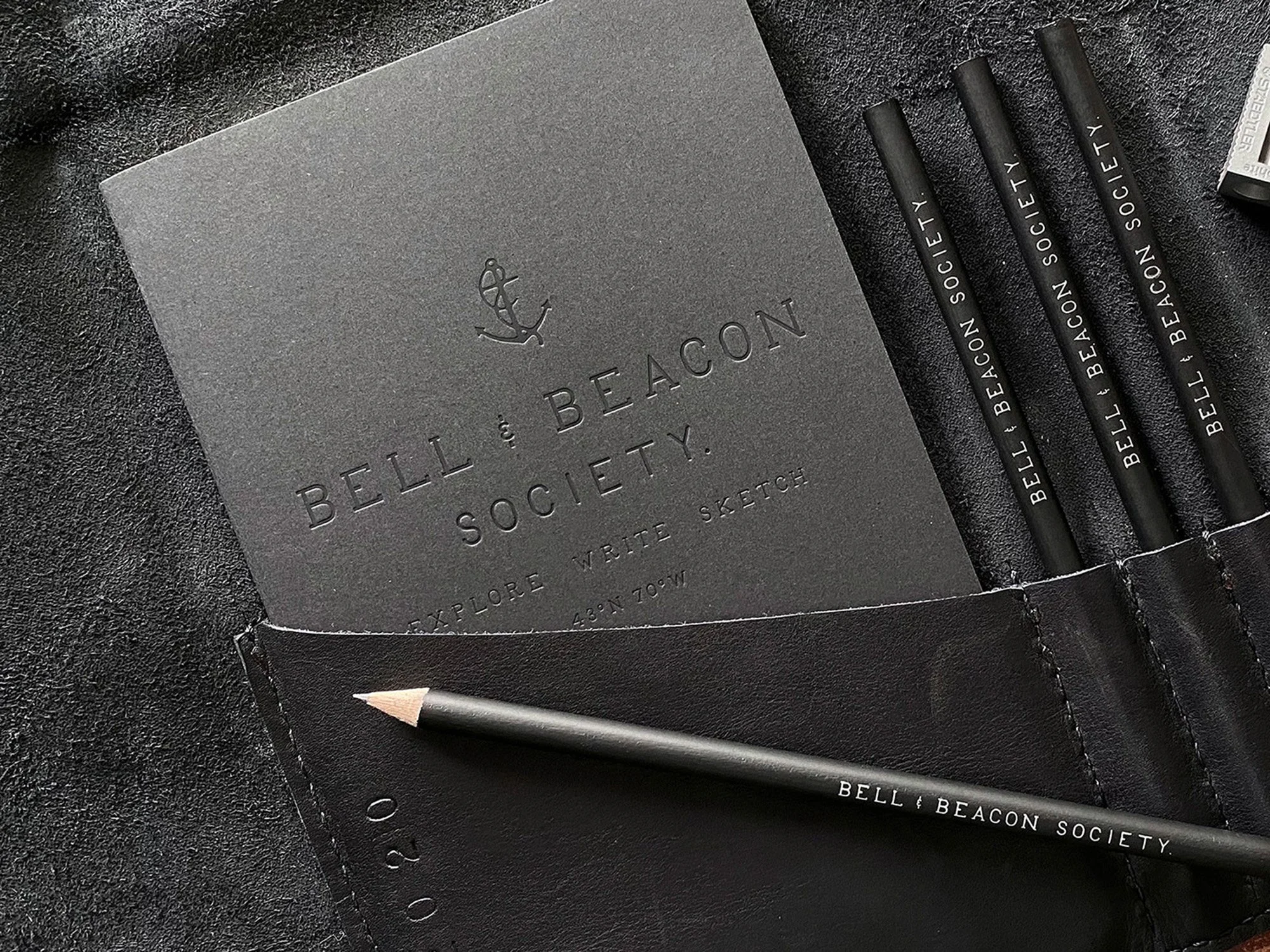





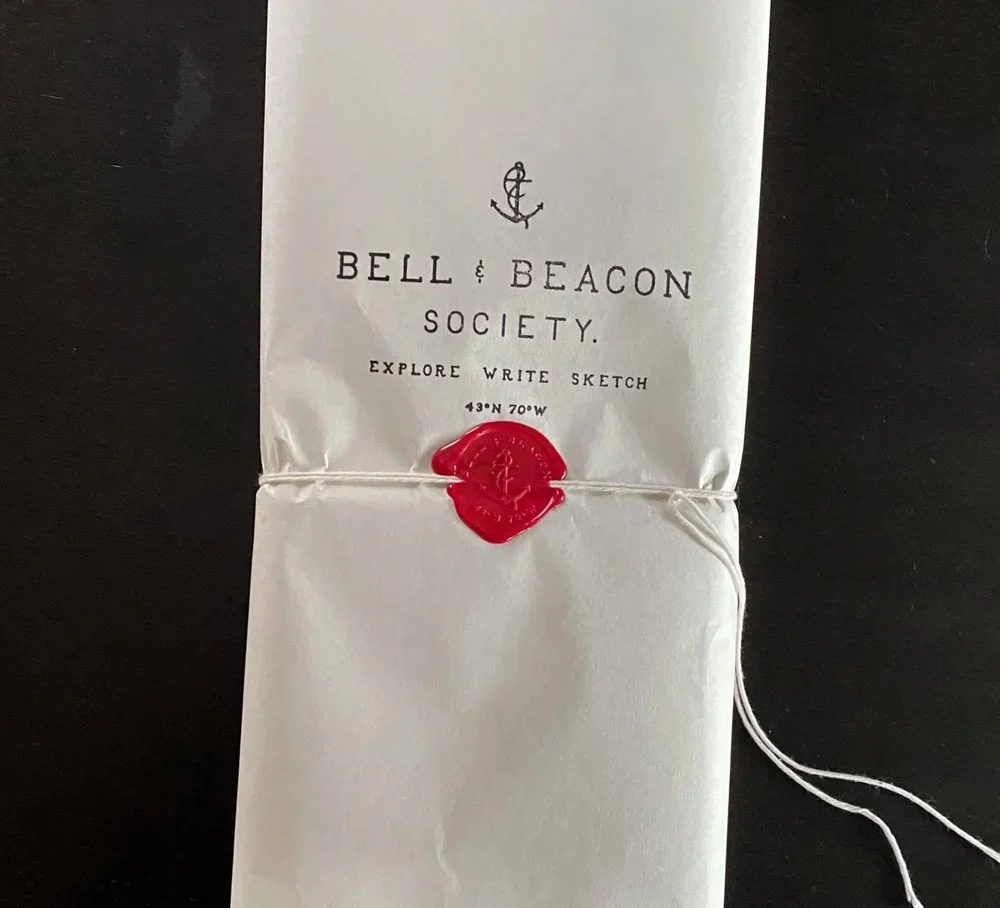
Studio Experiment
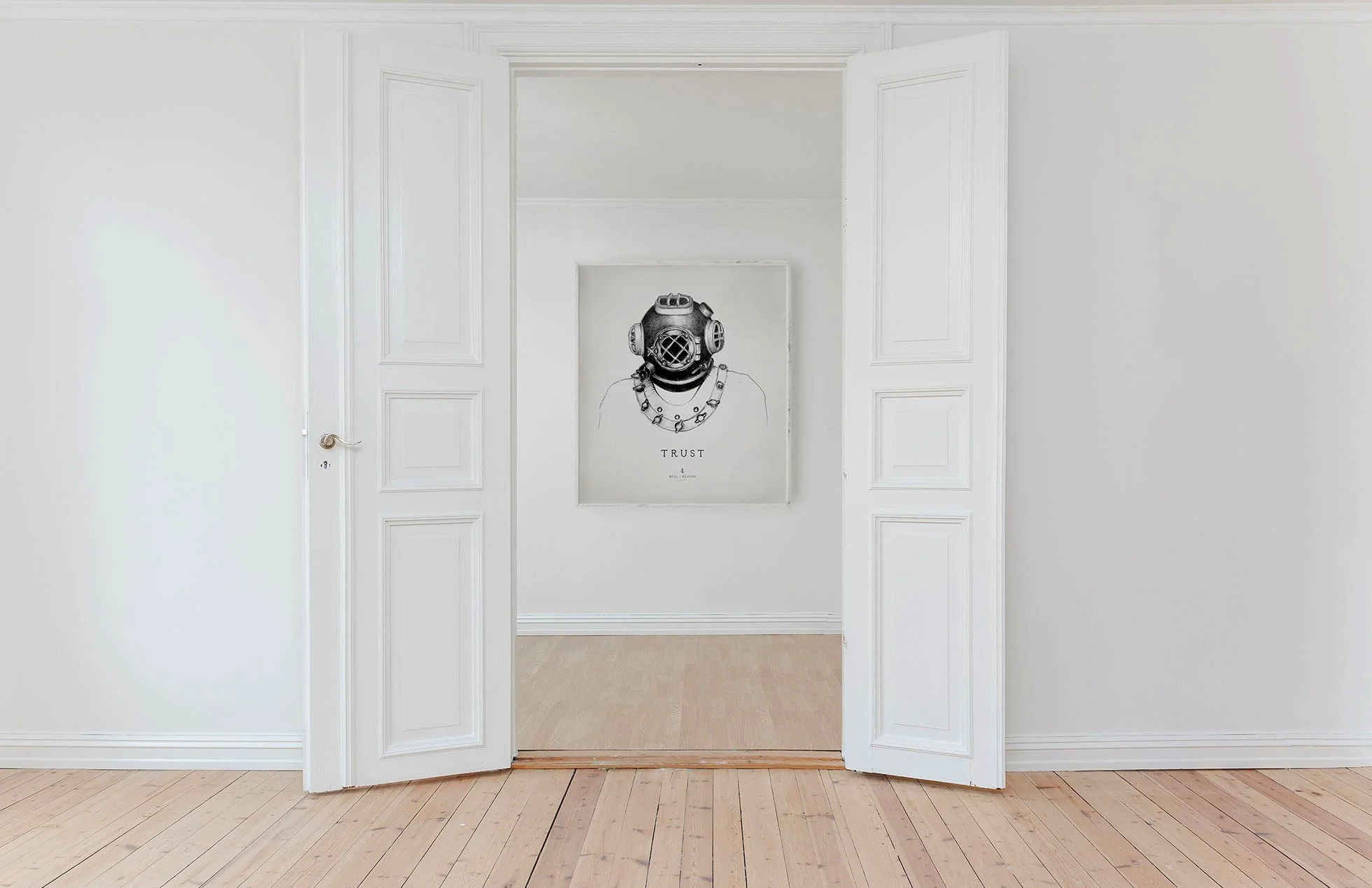
Bell & Beacon began as an exploration of how identity can extend beyond graphics into objects, materials, and lived experience.
The project combined illustration, typography, product design, packaging, and digital storytelling to create a cohesive brand world rooted in maritime culture and handmade craft.
Craft & Material
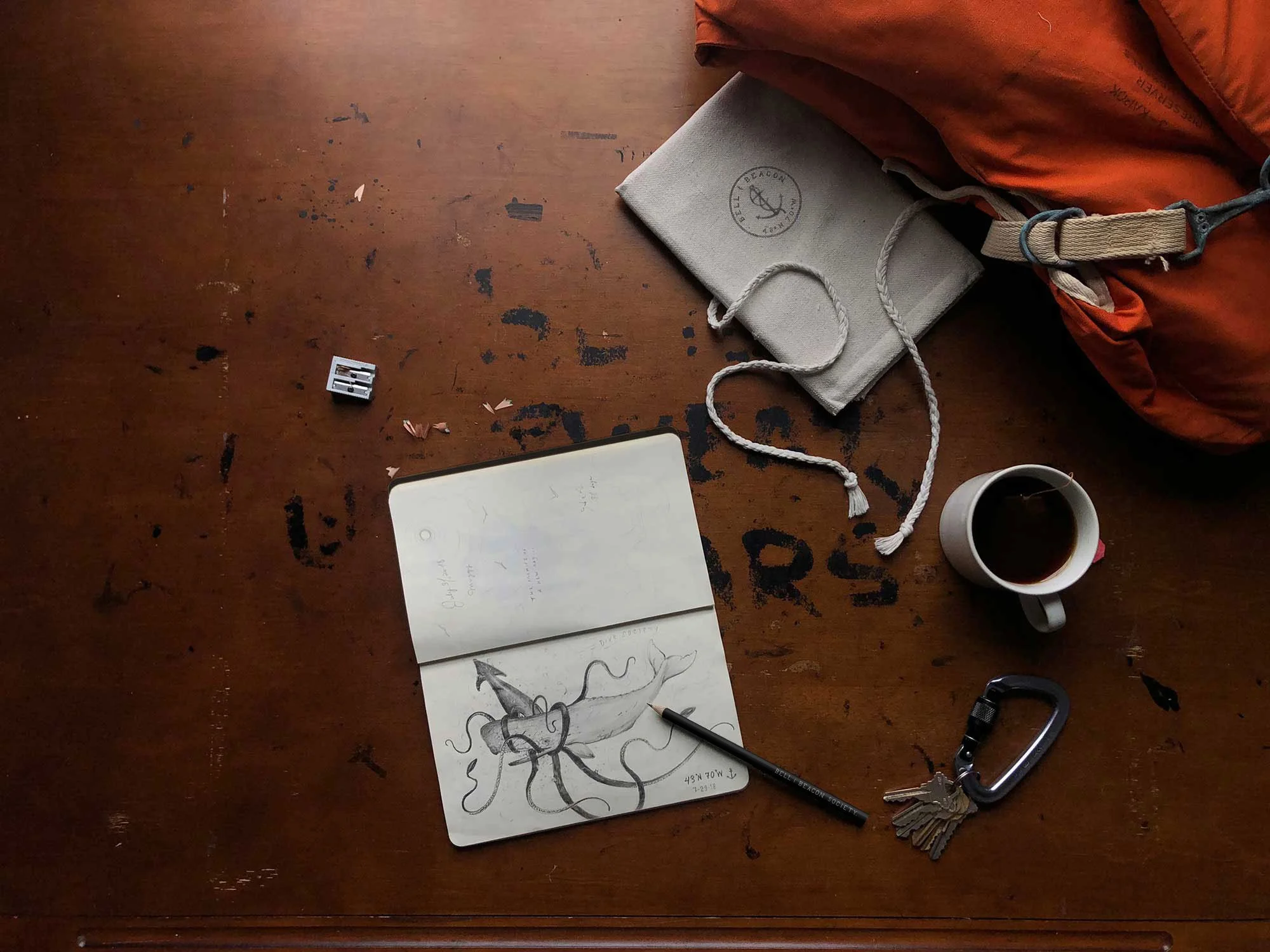
All Bell & Beacon products and artwork were designed and produced by Murphy.
Original illustrations, lettering, and nautical motifs were hand drawn and developed into a visual language applied across journals, packaging, prints, textiles, and leather goods.
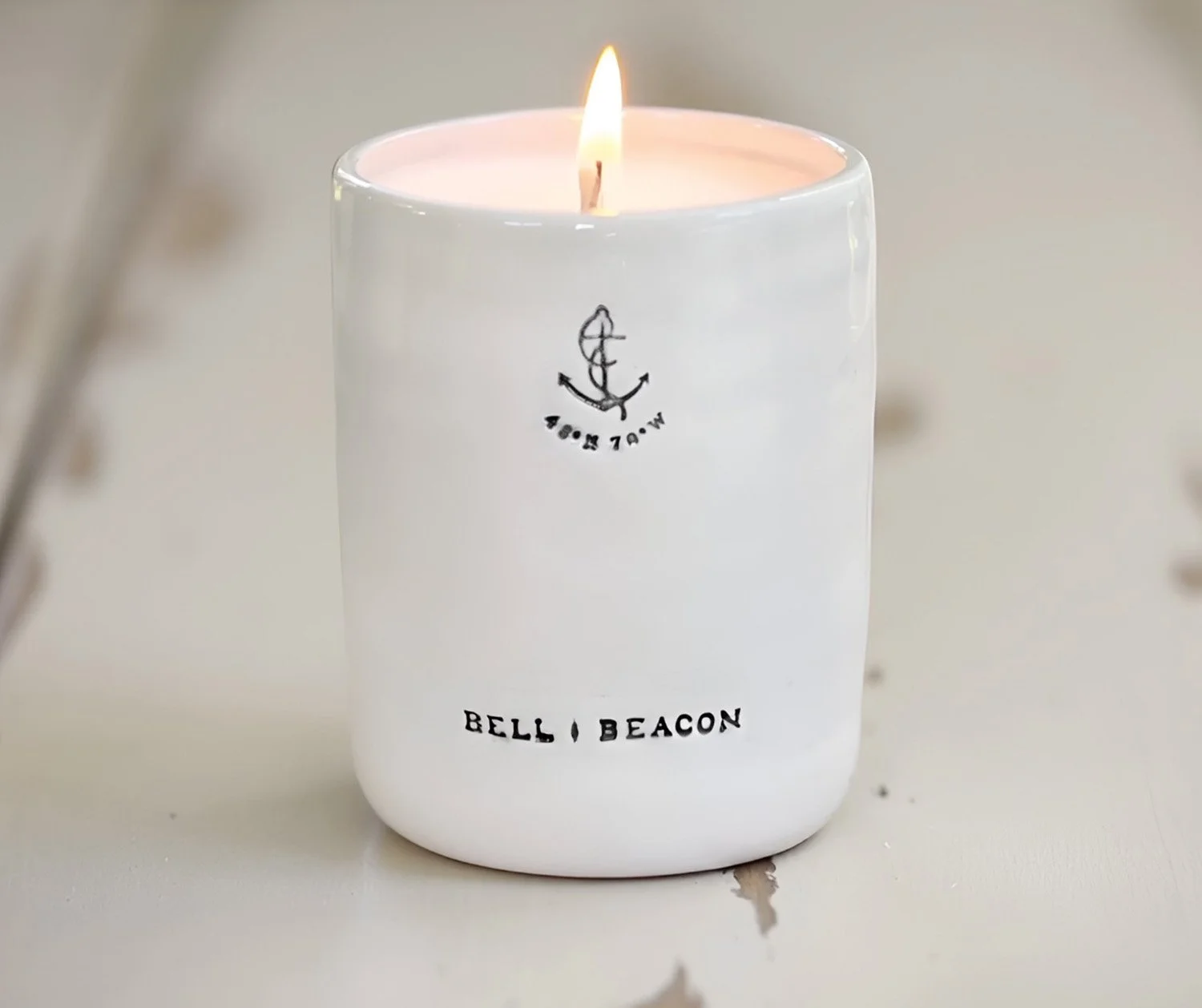
Materials were selected for durability and character, all designed to age gracefully and reflect the values of traditional craft.
Identity as Experience
Rather than existing only as a graphic system, Bell & Beacon explored how identity can live through objects, environments, and ritual.
Packaging, scent, handwritten notes, and tactile materials were all considered part of the brand experience, demonstrating how identity can be expressed through the physical act of making.
This project demonstrates how Identity Architecture can extend beyond visual systems into objects, materials, and everyday cultural experience.